
Florida Ridge garage door help
Garage Door Repair in Florida Ridge, FL
Florida Ridge sits just southwest of Vero Beach in Indian River County, a residential community of single-family and manufactured homes on mid-size lots. Garage doors here work hard through humid summers, afternoon storms and hurricane season. ASAP Garage Door Services helps with broken springs, off-track doors, cables, openers and remotes. This page explains what usually goes wrong, what a technician checks, and how to prepare before you call us to confirm availability and your service area.
Area service guide
Garage Door Repair in Florida Ridge, FL: what to know
Why garage doors in Florida Ridge deserve a closer look
A garage door is usually the largest moving object in a home, and in a community of mid-size lots like Florida Ridge it often serves as the main entrance people actually use. Residents carry groceries through it, park under it, and store tools, bikes and holiday boxes behind it. Because it opens and closes several times every day, the parts wear in a steady, predictable way, and small problems tend to grow quietly for months before they turn into a door that will not move at all. A short walk-around with a flashlight once a season, looking and listening before anything breaks, is one of the most useful habits any homeowner can build.
Weather on the Treasure Coast adds its own pressure. Long humid stretches, strong summer sun, sudden afternoon storms and the occasional tropical system all work on steel, aluminum, wood and plastic parts in different ways. Hardware that looks fine in March can feel noisy and stiff by September. Paying attention early costs far less in time and stress than waiting for a door that refuses to open on a rainy morning when you are already late for work or school. Many service calls begin with a small noise or a slight hesitation that someone noticed weeks earlier and decided to ignore until the weekend.
This page is written for homeowners, renters and property managers in and around Florida Ridge who want to understand their door before they pick up the phone. It covers springs, cables, rollers, tracks, panels, openers, remotes and storm planning in plain language. Nothing here replaces a technician looking at your actual door, but knowing the vocabulary makes the phone call faster, the diagnosis clearer and the visit more useful for everyone involved, including whoever has to approve the work. If you manage a rental or hold the property for someone else, sharing this kind of plain explanation with them often makes approval of a repair much easier.
Single-family and manufactured homes: what each garage asks of its door
Florida Ridge includes both single-family houses and manufactured homes, and the garage or carport setup can differ quite a bit from one to the next. Some garages are attached, with a finished ceiling and a framed opening that holds a standard sectional door. Others have lighter framing, lower headroom or an addition built later, which changes how the tracks and spring system must be mounted and how much load the surrounding structure can reasonably carry over years of daily use. Carports and converted garages bring their own questions, such as how the door was fastened and whether the opening is still square after years of settling.
That matters when a repair is planned. A technician will look at the header above the opening, the wall beside the tracks and the ceiling where the opener is fastened. If the framing is soft, cracked or held together with the wrong fasteners, a new part may not stay secure for long, however well it is installed. Telling us on the phone whether the garage is attached, detached or an add-on helps us prepare for the right kind of visit and bring suitable hardware. We would rather hear a few extra details during the call than send a technician out without knowing what the door is actually made of.
Door size is the other piece of the puzzle. Single-car, double-car and wider openings all use different springs, different track lengths and different opener strength. Measuring the width and height of the opening, or reading the label on the door when you can reach it safely, saves a lot of guesswork. If you cannot find the numbers, simply describe the door and its general age, and we can talk through what a technician should confirm once they are on site. Photos of the door, the opening and any labels you can see are welcome when you describe the job, and they often shorten the conversation noticeably.
Springs: the part that does the heavy lifting and the part to leave alone
Most residential doors in Florida Ridge use torsion springs, which are coiled bars mounted above the opening, or extension springs that run alongside the horizontal tracks. Either type stores a large amount of energy so that a door weighing well over a hundred pounds feels light when you lift it by hand. That stored energy is exactly why a spring failure is loud and sudden, and why it so often surprises people who happen to be standing inside the house when it lets go. If you are unsure which type you have, look above the door for a long bar with coils, or along the side tracks for stretched springs, and tell us what you see.
A broken spring usually announces itself with a sharp bang from the garage, a door that will not rise even though the opener motor runs, or a door that feels extremely heavy once it is released from the opener. Do not try to wind, loosen or replace a spring yourself. The tension can cause serious injury, and a wrong adjustment can leave the door unbalanced or dangerous. This is work for a trained technician who has the correct winding bars, the right replacement parts and the experience to set the tension properly. Because the parts share the load, an inspection of the whole spring system is more valuable than a quick fix to a single visible break.
When we plan a spring visit, we ask about the door size, its approximate weight and whether one or two springs are present. A technician will inspect the cables, drums, bearings and center bracket at the same time, since springs often fail near the end of their cycle life and the surrounding parts have seen the same wear. Replacing a single spring on an old pair can leave the door out of balance, so replacing the pair together is often part of the conversation. Keeping the door closed until the visit, and parking cars elsewhere, is the safest approach while a broken spring is waiting to be addressed.
Cables, drums and the door that hangs crooked
Lift cables run from the bottom corners of the door up to the drums at either end of the spring shaft, and they carry most of the load whenever the door moves. If one cable frays, slips off its drum or snaps, one side of the door drops while the other stays up. The result is a door that tilts, jams in the tracks, or refuses to travel more than a few inches before the opener gives up and stops. Taking a clear photo of the bottom corners and the cable ends before the visit gives the technician a head start on what parts to bring.
Cable trouble is easy to spot if you look without touching anything. Check for broken strands, rust at the bottom bracket, or a cable hanging loose near the track. Never pull on a loose cable, because it can still be under tension from the spring above. Step back, keep children and pets well away from the door, and avoid trying to force it up or down by hand, since a crooked door can shift suddenly and pinch fingers or worse. Do not park under a door that hangs crooked, because the sections can shift without warning, and do not lean on it to test how stable it feels.
In humid air, cables can corrode from the inside, so a cable that looks acceptable on the surface may be weaker than it appears. A technician will examine the bottom brackets, the drums and the whole cable path, and usually recommends replacing cables as a pair so both sides carry the load evenly. Mentioning on the phone that the door looks crooked, or that one side sits noticeably lower than the other, tells us to bring cable parts along. Afterward, the technician will usually test the balance by lifting the door by hand halfway, which shows quickly whether both sides carry the weight evenly.
Rollers, tracks and the off-track door
Rollers guide the door up and down inside the vertical and horizontal tracks. Nylon rollers tend to run quietly, steel rollers are more common on older doors, and worn ones start to grind, squeal or wobble. Over time the stems can bend, the bearings can dry out, and a roller can pop out of its hinge, leaving a section loose enough to swing out of the track and take the rest of the door with it. Dirty or dry tracks are rarely the real cause of a serious jam, but they do make everything else work harder, so a gentle cleaning is always worthwhile.
An off-track door is one of the more common calls we hear about. It can happen after a car bumps the door, after a cable fails, or after a long period of rough operation that nobody noticed. If the door is out of the track, do not run the opener and do not try to push it back in yourself. Forcing it can bend the panels, damage the tracks or put you directly in the path of a heavy section that may drop without warning. If a roller has already left its track, take note of which side it was, because that detail often points toward the underlying cause of the trouble.
The technician will check the track alignment, the brackets that hold the tracks to the wall, and whether any door sections have been bent or cracked. Sometimes the track can be straightened and the door reset, and sometimes bent sections need replacement. Knowing whether the door was partly open or fully down when it went off-track helps us plan how to secure it for the visit, and photos of the damage can make that conversation much easier. A technician may also check the horizontal track angle and the hanging brackets overhead, since loose ceiling hardware can let the whole assembly sag.
Humidity and moisture: how Florida Ridge air works on a door
Even a few miles from the water, Indian River County air stays humid for much of the year. Moisture gets into wooden door frames, swells the bottom edges of older panels, and encourages rust on exposed screws, hinges and spring ends. Steel doors with a damaged finish can rust along the bottom edge where water pools after storms. Insulated panels keep their shape longer, but any scratch or dent remains a place where moisture can begin working on the metal underneath. Painted steel and aluminum parts often hide early rust under a thin coat, so running a hand along the bottom edge now and then is a good test.
Weather seals matter here. The rubber strip along the bottom of the door and the vinyl stop along the sides keep out rain, insects and blowing debris. When those seals harden, crack or flatten, water finds its way in and the garage floor stays damp long after a storm has passed. A technician can replace bottom seals and weatherstripping during a service visit, which often improves the way the door sits and sounds when it closes against the slab. Dust and pollen sticking to damp seals can also make the door close unevenly, so a gentle wipe with mild soap and water is a sensible seasonal task.
Basic care helps too. Wipe the tracks gently so they are clean rather than oily, and use the lubricant type recommended for garage door hardware on hinges, rollers and springs. Avoid spraying grease on plastic parts or inside the tracks, since it collects dust and grit and makes the rollers slip. If you notice rust spreading on panels or hardware, mention it when you call so we can plan the visit and the parts accordingly. In this region, the stretch between the rainy season and the dry months is a natural time to schedule a check, before the next round of wet weather starts.
Afternoon storms, hurricane season and getting ready
Summer afternoon storms can roll through quickly in this part of Florida, bringing heavy rain, lightning and strong gusts. A garage door that is already loose, dented or poorly balanced can be pushed around by the wind in ways that damage tracks and hinges. Lightning and power surges can also affect openers and logic boards, which is why some owners unplug the opener during a major storm and plug it back in afterward. If a storm is forecast, park cars away from the door, clear loose items from the driveway and make sure the door latches properly or is fully closed and secured.
Before hurricane season, it is wise to look over the door carefully. Check that every hinge is tight, that the tracks are straight and firmly bolted, and that no panel has cracked or bowed. Weak spots are where wind pressure does the most damage. If you are considering a wind-rated or impact-rated door, talk it through by phone, since these doors are built to resist wind and flying debris better than standard ones and the choices differ in construction. Planning ahead also means knowing where your manual release cord is and making sure everyone in the household can reach it and understands when not to use it.
After a storm, do not run the opener if the door looks bent, shifted or hanging unevenly. Look for debris in the tracks, torn weather seals or broken glass in window panels. Call us to confirm availability and the service area, describe the damage, and keep the door closed and secured until a technician can look at it. Take photos of any damage if you may need them for a later insurance conversation with your carrier. Storm recovery goes better when you describe what changed, such as a new gap along the sides, a dent near the middle or a sound that was not there before.
Openers, safety sensors and the door that reverses
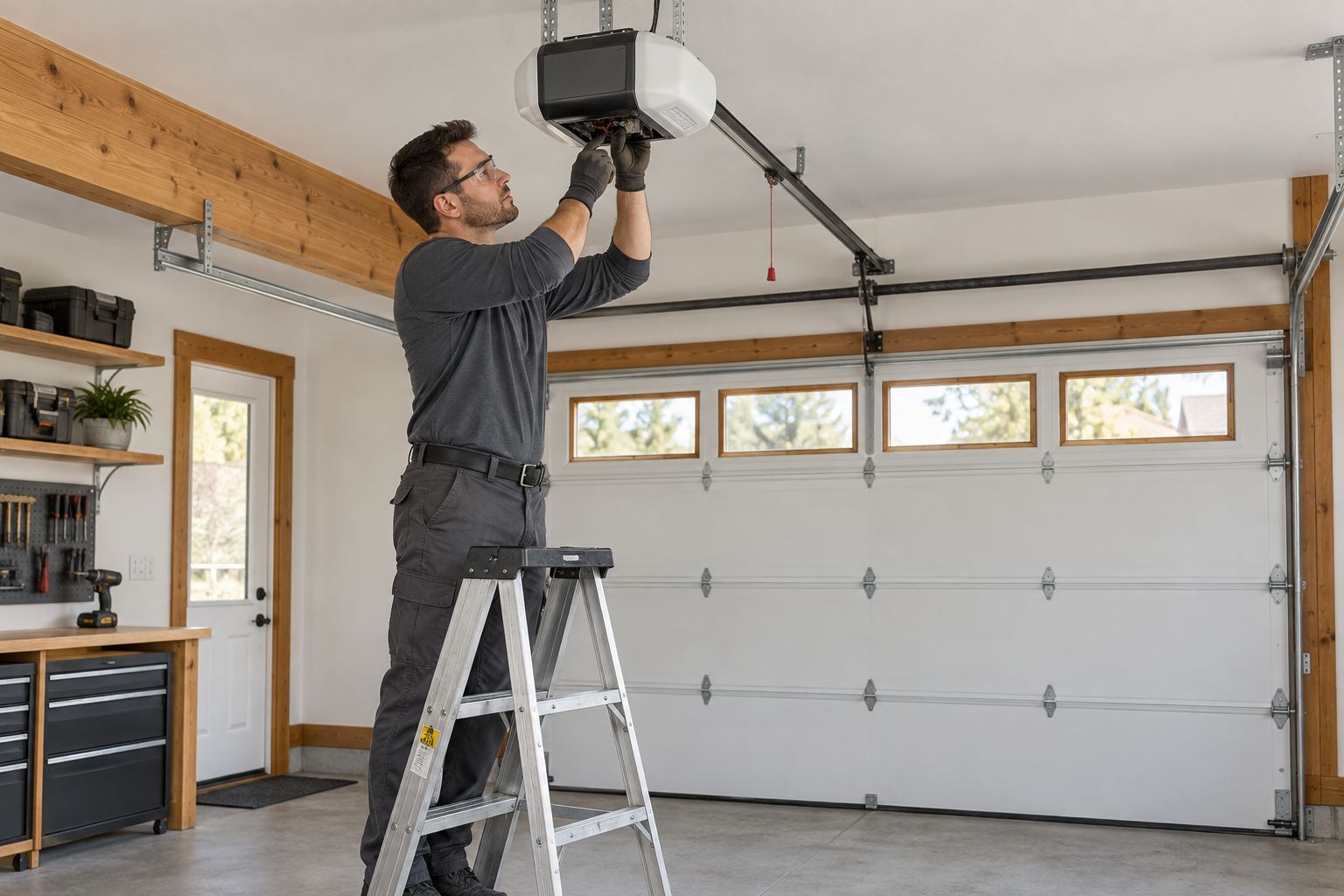
The opener is the motor unit that moves the door, and its job is to guide the door, not to carry its full weight. If a door is heavy because a spring has broken, running the opener can burn out the motor or strip the drive gear. When a door seems hard to move by hand with the opener disconnected, treat it as a spring or cable issue before blaming the opener itself, since that saves both money and frustration. If lights flicker or the opener stays unresponsive after the power comes back, wait a moment, check the outlet and the wall button, then call us if nothing changes.
Safety sensors sit near the floor on either side of the opening and send an invisible beam across it. If something blocks that beam, or the sensors are bumped out of alignment, the door will refuse to close or will reverse right away. Check for spider webs, stored items and loose brackets. Clean the lenses gently with a soft cloth and look for the indicator lights on both sensors, which usually glow steady when the pair is aligned and communicating. Never reach into the track area while testing the sensors, and never hold the door open with your body while the opener is running, because the force can hurt.
If the door closes but then pops back up, the opener may have its travel limits or force settings out of adjustment, or a worn component may be causing extra resistance. A technician can test the reversal function and adjust it safely. Tell us the opener brand and approximate age if you know it, since older units may not have the same safety features as newer ones, and that affects whether a repair or an upgrade is the better path. Many opener complaints turn out to be a combination of a small alignment problem and a tired remote, which a single visit can usually sort out together.
Remotes, keypads and battery backup
Remote problems often feel like door problems but usually have simpler causes. A weak battery, a remote that lost its programming, or a receiver that needs resetting can all make the door seem dead. Try replacing the battery first and standing closer to the garage. If one remote works and another does not, the opener is probably fine and the problem lies with the remote itself, which is a much easier thing to correct. It also helps to note whether the problem happens at one end of the travel, near the floor or near the top, because that points toward different adjustments.
Wall buttons and exterior keypads add convenience, but they rely on wiring and batteries too. Keypads in particular are exposed to sun, rain and humidity, so their buttons can become stiff or unresponsive over time. Technicians can reprogram keypads, replace wall controls and set new access codes. If you rented the home or recently moved in, resetting the codes and clearing old remotes is a sensible step that takes very little time. Tell us how many remotes you use and whether any are built into a vehicle, since some car systems need their own reprogramming steps after the opener changes.
A battery backup option lets some openers lift and lower the door during a power outage. In an area where storms can knock out power for hours, that can mean the difference between a trapped car and a normal morning. Not every opener supports this, so ask us during the call whether yours does. Knowing how to use the manual release safely is also worth practicing once, in daylight, before you ever need it in a hurry. Keypad codes deserve the same attention as house keys, so change them when contractors, former tenants or relatives who no longer need access have used them.
Repair or replace: deciding what makes sense for your door
A repair is usually the right answer when the damage is limited to one part: a spring, a cable, a set of rollers, a sensor or a worn seal. The door sections are straight, the tracks are sound and the opener still works. In those cases, fixing the specific problem returns the door to normal operation without the expense and disruption of installing a whole new door, and you keep a door you already know and like. Remember that the manual release is meant to be used with the door fully closed, and that a door with a broken spring can fall quickly when it is let go.
Replacement becomes worth discussing when several sections are bent or cracked, when rust has weakened the panels, or when the door is badly out of square from repeated damage. It also makes sense when the door is old enough that parts are hard to find, or when you want better insulation, quieter operation or a wind-rated or impact-rated style. Newer doors also tend to come with updated safety features that older ones simply lack. Age, appearance and how often the door has needed attention in the past all matter, and a technician will weigh them against your budget and your plans for the home.
We are happy to talk through both paths by phone. Quotes are given by phone for simple jobs, and a more complicated job needs a visit so a technician can see the door in person. The service call charge is explained before dispatch, so there are no surprises about how the visit is handled. Tell us your goals and your concerns, and we will explain the realistic options in clear terms before you decide anything. If you plan to sell, rent out or refinance the property soon, a door that looks tired and operates roughly can leave a poor first impression, so mention that as well.
Planning your call and what to have ready
When you call, start with what you saw and heard: a loud bang, a door stuck halfway, a motor that hums but does nothing, or a door that closes and then reverses. Mention the door size if you know it, the number of cars it serves, and whether the garage is attached. Tell us if a car is blocked inside, or if the door cannot be secured and the house is left open, because that changes how we handle the call. Ask what happens if you decide not to proceed after the visit, so you understand the service call charge and any next steps before anyone is dispatched to your address.
Also tell us whether you own the home, rent it or manage it for someone else. If you rent, the owner or a property manager may need to approve the repair. For homes in an HOA community, some associations have rules about door style, color or window panels, which affects replacement choices. Having that information ready helps us plan the conversation and avoids a second call just to sort out who decides. If several people use the door, ask them what they have noticed, since a teenager or a neighbor sometimes spots a symptom the main user stopped hearing long ago.
On the day of the visit, clear the area around the door and move vehicles out of the way if you can do so safely. Keep pets and children indoors. A technician will inspect the door, explain what they found and talk through the options before work begins. Please call us to confirm availability and the service area for Florida Ridge, and we will take it from there with a plain explanation at each step. If your home is in an HOA community, it is also worth checking the rules before choosing a replacement style, and we can talk through what usually matters in those reviews.
Common questions about Garage Door Repair in Florida Ridge, FL
Can I replace a broken garage door spring myself?
We strongly advise against it. Springs hold a large amount of stored energy, and a slip with the winding bars can cause serious injury. A technician has the right tools, knows how to balance the door afterward, and will inspect the cables and hardware at the same time. If you hear a bang from the garage, keep the door closed and call us.
Why does my garage door reverse right after it closes?
The most common cause is a blocked or misaligned safety sensor near the floor. Check for debris, stored items or a bumped bracket, and wipe both lenses with a soft cloth. If both sensor lights glow steady and the problem continues, the opener travel limits or force settings may need adjustment, which a technician can do safely.
Does humid Florida air really damage garage doors?
Yes, over time. Moisture encourages rust on hinges, screws and spring ends, swells wooden panels and hardens weather seals. Regular cleaning, proper lubrication of hinges and rollers, and replacing worn seals slow the process considerably. If you see rust spreading on panels or hardware, mention it when you call so the technician can plan for it.
How do I prepare my garage door for hurricane season?
Check that the hinges are tight, the tracks are straight and bolted, and the panels are not cracked or bowed. Consider whether a wind-rated or impact-rated door fits your situation and talk it through by phone. After a storm, avoid running the opener if the door looks damaged, and call us to describe exactly what you see.
How does quoting and scheduling work with ASAP Garage Door Services?
Call us to confirm availability and the service area. Quotes for simple jobs are given by phone, while a more complicated job needs a visit first so a technician can see the door. The service call charge is explained before dispatch, so you know how the visit works before anyone is sent to your home.
Ready to talk through the door?
Call ASAP Garage Door Services
Describe the symptoms and property access for Florida Ridge so the team can discuss scheduling and the next appropriate step.