
Grant-Valkaria garage door guide
Garage Door Repair in Grant-Valkaria, FL
Grant-Valkaria is a small town in southern Brevard County with large lots, a rural feel and the Indian River Lagoon never far away. Garage doors here deal with salt-tinged humidity, heavy summer rain and the wear of busy workshop-style garages. This guide explains common problems, what a technician checks and how to prepare a call. Phone us to confirm availability and your service area.
Area service guide
Garage Door Repair in Grant-Valkaria, FL: what to know
Garage doors on large Grant-Valkaria lots
Grant-Valkaria has a spread-out, country character, with homes on generous lots and plenty of space between neighbors. That layout shapes how people use their garages. Many are not just for parking cars. They hold boats, kayaks, tools, lawn equipment, hobby projects and storage that would not fit anywhere else. A garage that works this hard sees more door cycles and more bumps than a typical suburban one, and its door deserves a matching level of care and attention.
Because the lots are large, driveways tend to be long and the garage is often the main entrance people use when they come home. A door that fails at the wrong moment can mean carrying groceries around the house, leaving a vehicle exposed or being unable to reach tools. Thinking of the door as an everyday piece of equipment, with parts that wear and need replacement on a schedule, makes failures less of a surprise.
When you call about a problem, tell us how the garage is used. A door that lifts a heavy wood panel, a door with a workshop window, or a double-wide door that opens many times a day behaves differently from a plain single door. These details help the technician choose springs, rollers and an opener that suit the way you really live, rather than a generic setup that wears out sooner. If you keep a second refrigerator, a freezer or a workbench in the garage, mention it as well. Crowded walls can limit where a technician can stand and where the ladder fits, and a short heads-up lets you clear a path before the visit instead of scrambling while the work waits.
Lagoon humidity and slow corrosion in southern Brevard
The Indian River Lagoon influences the air across southern Brevard County. Even when you cannot see the water from your yard, the humidity carries a hint of salt on many days, and that settles on exposed metal. Garage door hardware is mostly bare steel and light coatings, so rust appears first on bolts, hinge pins, spring coils and the bottom edge of the door. The process is slow, which is why it is easy to overlook until a part seizes.
Notice the sounds. A door that squeaks, groans or pops usually has dry or rusting parts, and a door that moves with a shudder may have a rough roller or a stiff hinge. Wipe away dust and look closely at the cable ends, the bottom brackets and the places where parts overlap. Orange dust on a spring, or flaky paint at the base of a steel panel, is a signal to schedule an inspection.
A technician can recommend which parts to clean, which to lubricate and which to replace. Lubricant belongs on hinges, roller stems and spring coils in the right amount, while the inside of the track should be wiped clean rather than oiled. Doing the wrong thing, such as heavy oiling everywhere, traps grit and speeds wear. Asking for plain guidance on routine care is a sensible part of any service visit. Another small point is wet footprints and dripping gear. Water carried in on boots, boats and fishing equipment collects at the bottom corners of the door and the track ends, which is exactly where rust begins. Rinse and wipe those areas now and then, and your hardware will thank you.
Spring types, balance and why you should leave tension alone
The springs are the heart of a garage door. A door can weigh well over a hundred pounds, and the springs carry nearly all of that load so the opener does not have to. Torsion springs are mounted on a bar above the opening, and extension springs run along the horizontal tracks. When one breaks, the door becomes extremely heavy and the opener may groan or simply hum without lifting. Often there is a loud bang beforehand that people mistake for something else.
It is tempting to try a quick fix, but spring work is one of the more dangerous jobs in home maintenance. The tension is released suddenly if a winding bar slips, and the result can be serious injury. Even tightening a bracket near a loaded spring can be risky. Please do not adjust a spring, a cable or the bottom brackets yourself. Stop using the door, keep the area clear and call us so the work is done safely.
A correct repair depends on matching the spring to the door. The wire size, length and winding all matter, and the right choice changes if the door has been painted, insulated or fitted with windows. After installation, a technician balances the door so it stays in place when stopped partway. A balanced door runs quieter, protects the opener motor and lasts much longer. Ask what the technician found about balance and how it was adjusted. Ask the technician to point out the spring label or measure the coil so you understand what is on your door. Having that information written down makes future calls easier, and it helps you judge whether a replacement was sized sensibly for a door that may have been altered since it was installed.
Cables, drums and the signs of a door about to fail
Lift cables connect the bottom corners of the door to the drums on the spring bar. When the door goes up, the cables wind; when it goes down, they unwind. They are strong, yet they live under constant tension and can corrode, fray or slip off the drum. A broken strand sticking out of a cable is a clear warning. So is a door that rises with one side lagging behind, or a cable that sags when the door is closed.
If a cable breaks, the door can drop on one side, jam in the tracks or twist. The first reaction is often to try to fix the crooked door, and that is exactly when panels get bent. Stay clear of the door and call. Take photos from a distance if it is safe, and describe where the cable ended up, because that helps the technician bring the right parts and tools for the repair.
Cables and springs wear at similar rates, so a technician will usually inspect both together and let you know if one looks near the end of its life. It is often more sensible to replace related parts during the same visit than to schedule separate calls. Ask for a straightforward explanation of what is worn, what is still good and what can wait, so you can plan sensibly. Watch for fraying near the bottom bracket, where moisture tends to sit. A cable can look fine along most of its length and still be weak at the end. If you notice a few thin wires sticking out, treat it as urgent and stop using the door until it has been inspected.
Tracks, rollers and noise you should not ignore
A garage door glides on rollers that sit inside metal tracks. The tracks must be straight, level and firmly attached to the framing, and the rollers must turn smoothly. Over time, bolts loosen, rollers wear flat and the track can shift slightly. The first symptom is usually noise, a rattling or grinding that grows louder over weeks. Pay attention if the door rubs, sticks or jerks partway up. Do not forget the horizontal tracks overhead. Sagging, loose hangers and a cluttered ceiling full of stored items can interfere with the door and the opener rail. Keep the area clear, and tell us if anything is hung from the track or the spring bar, because that can alter the way the door balances.
Rollers come in steel and nylon, with sealed or open bearings. In humid, salty air, open steel bearings corrode faster, while nylon rollers run quieter and cope better with moisture. If your door still has its original rollers and it is more than several years old, replacing them is a sensible preventive step. It reduces noise, steadies the door and lowers strain on the opener, hinges and panels.
A door that has come off the track needs careful handling. Do not try to push it back into place or run the opener. The panels are thin enough to buckle, and the springs may still be loaded. A technician can realign the track, replace bent sections and check the hardware. Give us the door size, which side looks lower and what happened just before the problem, such as a bump or a loud noise.
Panels, insulation and doors built for hard-working garages
Garage doors are made from steel, aluminum, wood, composite or fiberglass, and each handles Florida weather differently. Steel is strong but can rust where the coating is scratched. Aluminum resists rust but dents more easily. Wood looks warm but absorbs moisture and needs finishing. Composite and insulated doors offer a solid feel and a quieter ride. The best choice depends on how you use the space and how much upkeep you want to take on.
Insulation matters in a hot climate. A garage that doubles as a workshop or storage room can become extremely warm in summer. An insulated door slows the heat, reduces noise and adds rigidity to the panels. Windows let in light but should be considered with security and storm exposure in mind. A technician can describe the options and help you weigh them against your budget and your needs. Finally, remember that thin glass or plastic window inserts are not designed to take a hit from a flying branch. If your door has windows, consider how they would fare in a storm, and ask about the options that add strength without making the door too heavy for its springs.
Damaged panels can sometimes be replaced individually, but matching an older door can be difficult. If a section is cracked, creased or rotted, the whole door may flex, which strains hinges and rollers. When you call, tell us the number of panels, the material, any windows and the door's age. Photos of the damage and of the entire door from the driveway are the most useful way to start.
Hurricane season readiness for Grant-Valkaria homes
Every Brevard County homeowner thinks about hurricanes, and the garage door is one of the first places wind can enter a house. Once wind gets inside, it adds pressure to walls and roof from within. A door in good repair, with sound tracks, tight hinges and a solid bottom seal, handles wind better than a tired one. Make a basic check each spring and again before peak storm months.
Doors designed for high wind add reinforcement, and impact-rated doors add protection from debris. These are separate features, and they involve different construction. If you are considering a new door, ask for a plain explanation of what each type does and what hardware it needs. Check with your insurer and local permit office about their expectations, since those can influence which product you choose. A word about the wall button: it is not only a convenience but a diagnostic tool. If the wall button runs the door and the remote does not, the problem is almost certainly in the remote or receiver. If neither works, check the outlet and the safety sensors before assuming a failed motor.
After a storm, look at the door from the driveway before touching it. Check for bowed panels, loose tracks and cracked hinges. Do not run the opener if it looks wrong. With roads and power often disrupted, wait times can stretch, so call early and have your details ready. We cannot make promises about timing in storm conditions, but we will be honest about what we can do and ask you to confirm availability.
Openers, sensors and keeping the daily routine smooth
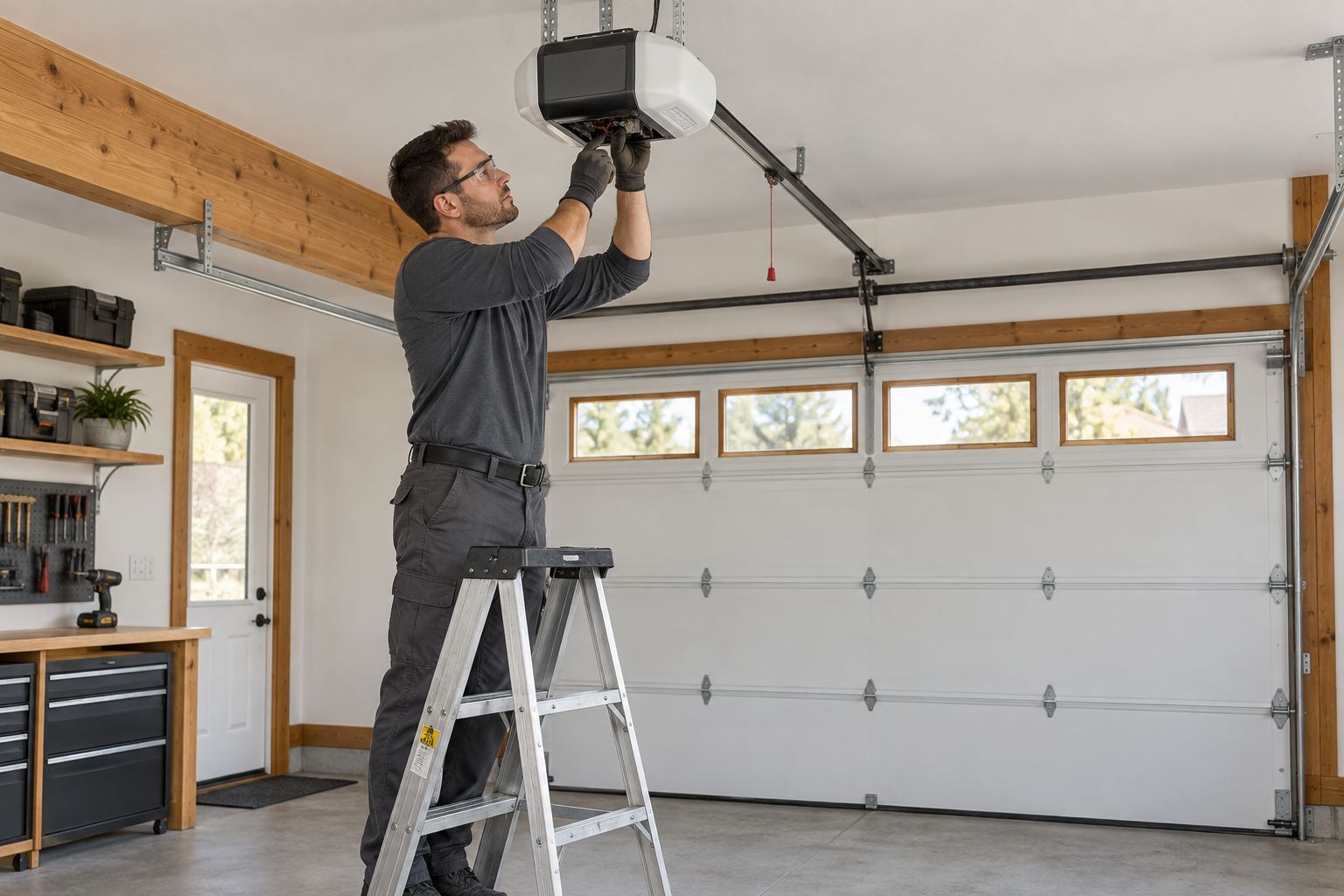
A reliable opener is a quiet part of daily life until it stops. Most openers use a chain, belt or screw drive, and each has different noise and maintenance traits. Chain drives are common and sturdy but louder. Belt drives run smoothly and quietly. Screw drives have fewer moving parts. Whatever you have, the opener should only be asked to move a balanced door, not to drag a heavy one.
If the door starts to close and reverses, the safety sensors are usually the reason. They sit a few inches off the floor on either side of the opening. A bump, a spiderweb, a bit of dirt or moisture can break the beam. Clean the lenses with a soft cloth and look at the indicator lights. If the lights are dim or flashing, a bracket may have shifted, and a technician can realign them.
Remotes and keypads can fail independently of the opener. Replace the batteries first, and bring the remote close to the door when testing. An outdoor keypad in humid air can corrode and stop working. Change the access code after workers, tenants or guests have used it. Keep a note of the opener brand and installation year, since many repairs depend on those details. If a surge knocked out the opener, tell us what else lost power in the house, such as a router or a refrigerator. That helps us decide whether the problem is localized to the garage circuit and whether a surge protector, a new outlet or a replacement control board is likely to be involved.
Power outages, battery backup and the manual release
Storms and summer lightning can knock out power for hours, and sometimes longer in outlying areas. When the power fails, the opener stops working, and the door must be run by hand. Every household member who might need to leave or enter should know where the red release cord is and how it works. Practice once on a calm day, with the door balanced and in good condition.
Never pull the release if the door is open and a spring has broken or the door is off track, because it can fall suddenly. A heavy door can injure people and damage vehicles. If you are not sure about the door's condition, leave it alone and call. A battery backup is a good option for homes that rely on the garage, because it allows a limited number of cycles during an outage.
The backup battery must be maintained. Test it once in a while, and replace it when the unit signals low charge. After power returns, watch the door as it cycles to be sure nothing was damaged by a surge. If the opener does not respond, check the outlet, the breaker and any surge protector, then let us know the brand and what lights or beeps you see. Look for sandy or muddy deposits along the bottom of the door, a sign that water is getting in and flowing across the slab. Sweep that area, check the slope of the driveway, and mention what you find, because the cure may be a better seal, a threshold strip or both.
Weather seals, pests and a dry garage floor
A good seal along the bottom of the door keeps rain, leaves, insects and small animals out of the garage. In southern Brevard, summer downpours can push water under a worn seal and across the floor, soaking boxes and tools. Over time, the rubber hardens, splits or pulls loose. You may see light under the door or find debris inside. Replacing a seal is a common, simple repair when the correct type is used.
Seals come in different shapes to fit the channel on the bottom of the door, so measuring or describing the old one helps. The side and top stops matter as well, since they close gaps around the frame. If the concrete slab is uneven, the door may not seal fully, and a technician may suggest adjusting the closing limit or adding a threshold piece to guide water away.
Pests are a real issue near open land. Mice and lizards can slip through small gaps, and insects like to nest in sensor housings and track ends. Check the sensors for webs or nests if the door reverses for no reason. Keep stored items off the floor where possible, and think about whether a better seal and a tidy perimeter could reduce the problem. If your property has a guest cottage, workshop or second garage, list every door that needs attention when you call. Grouping the work saves a second trip and lets the technician bring the right springs, rollers and seals for all of them in one organized visit.
Planning the call, HOA questions and repair or replacement
Most of Grant-Valkaria is not a dense neighborhood grid, but some communities do have homeowners associations with rules on door style, color and hardware. If that applies to you, check the rules before ordering a replacement. If you rent, ask the owner or property manager first. A quick message in writing can prevent disputes and lets the work proceed smoothly once approved. Take a moment to think about what you want from the door in the next ten years. If you plan to sell, a clean, quiet, well-balanced door adds to the first impression. If you plan to stay, durability and low maintenance may matter more. Either way, we can discuss the choices.
To decide between repair and replacement, consider how old the door is, how many parts are worn and how much of the door is damaged. A sound door with one broken part is usually worth repairing. A door with rotted wood, deep rust or crushed sections may be better replaced. A technician can walk you through the choice after looking at the door, the opener and the surrounding framing.
Quotes are given by phone for straightforward work, and a complicated job needs a visit, with the service call charge explained before dispatch. Before you call, gather the door size, the number of panels, the opener brand, photos and a description of the symptoms. Then call us to confirm availability and your service area, and we will help you choose the next step without pressure.
Common questions about Garage Door Repair in Grant-Valkaria, FL
What should I do if my garage door makes a loud bang and will not lift?
A loud bang often means a spring has broken. Do not run the opener or try to lift the door by hand, since it may be very heavy and can slip. Keep people and pets clear, and call us with the door size and whether it is open or closed. A technician can then arrange the correct replacement safely.
How often should garage door parts be checked in southern Brevard?
A quick look and listen each season is a good habit, and a closer check before hurricane season is wise. Lagoon humidity and salt in the air speed corrosion, so inspect springs, cables, hinges and the bottom seal. If anything squeals, sticks or looks rusty, schedule an inspection rather than waiting for a failure.
Why does my garage door reverse before it closes?
The safety sensors are the usual cause. They sit near the floor on both sides of the door, and a blocked or misaligned beam makes the door reverse. Wipe the lenses, remove webs or debris, and look at the indicator lights. If it keeps happening, call us with your opener brand so we can troubleshoot.
Do you give quotes by phone?
Straightforward jobs can be quoted by phone from your description and photos. A complicated job needs a visit, and the service call charge is explained before dispatch. Have your address, door size, opener brand and symptoms ready, and call us to confirm availability and your service area before you plan around a visit.
Is a wind-rated door worth asking about for a Grant-Valkaria home?
It is reasonable to ask. Wind-rated doors are reinforced to resist pressure, and impact-rated doors are built to resist debris, which are different features. Ask a technician to explain what applies to your opening and how it affects the springs and opener, and check any insurer or permit requirements before choosing a product.
Ready to talk through the door?
Call ASAP Garage Door Services
Describe the symptoms and property access for Grant-Valkaria so the team can discuss scheduling and the next appropriate step.